
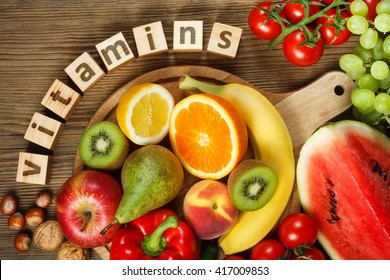
➤Vitamins are organic compounds and minerals , are chemical
elements that are required as nutrients in small amounts by
an organism.
Or
➤ A vitamin is:
– An organic compound distinct from fats, carbohydrates and
proteins
– Natural component of foods, present in minute amounts
– Is essential for normal physiological function, usually in minute
amounts
– Cause a specific deficiency syndrome when absent or underutilized
– Is NOT synthesized by the host in amounts adequate to meet
normal physiological needs: human can make vitamins D3 and B3
Pre-Vitamin History (Interesting Facts)
• 1500 BC – Ancient Egyptians used liver - rich in vitamin A - applied
to the eye to treat night blindness.
• 1536 – Jacques Cartier, exploring the St. Lawrence River, uses local
native knowledge to save his men from scurvy by boiling the needles
from cedar trees to make a vitamin C-rich tea.
• 1795 – British navy adds lemons to sailors' rations, 40 years after a
Scottish naval surgeon, James Lind, had urged that citrus fruits be
used to prevent scurvy.
• 1884 – Japanese navy eradicates beriberi by feeding sailors meat
and fruit in addition to polished white rice, which lacked the
thiamine-rich husks.
• 1911 – Casimir Funk names antiberiberi factor as vitamine.
• 1912 – Xavier Mertz – Antarctic explorer – dies of vitamin A
poisoning from ingesting sled dog liver after supplies are lost in a
crevasse.
History of Discovery
Year discovered Vitamin Source
1912 Vitamin B1 (thiamin) Rice bran
1912 Vitamin C (ascorbate) Lemons
1913 Vitamin A Milk/egg yolk
1918 Vitamin D Cod liver oil
1920 Vitamin B2 (riboflavin) Eggs
1922 Vitamin E Wheat germ, Seed oils
1926 Vitamin B12 (cobalamin) Liver
1929 Vitamin K Alfalfa
1931 Vitamin B5(pantothenic acid) Liver
1931 Vitamin B7 (biotin) Liver
1934 Vitamin B6 (pyridoxine, etc.) Rice bran
1936 Vitamin B3 (niacin) Liver
1941 Vitamin B9 (folate) Liver
Classification of Vitamins Based on Solubility
• Fat-soluble vitamins: A, D, E, K
• Water-soluble vitamins: B’s and C
– B1, thiamine; B2, riboflavin; B3, niacin; B5, pantothenic acid;
B6, pyridoxine, pyridoxal, or pyridoxamine; B7,biotin; B9, folate;
B12, cobalamin
Storage and Excretion
• Fat-soluble vitamins: A,D,E and K
– Well retained in the body and tend to be stored in
fatty tissues: adipose, muscles, liver
– Therefore, it takes time to reach a deficiency state
– More likely to cause toxicity on over-dosage because
of the slow clearance
• Water-soluble vitamins: B and C
– Excreted rapidly and not well retained
– Need regular replacement
– Only vitamin B12 and B9 retained and stored at
significant level in the body
Functions
• As Per definition, vitamins are essential to many life
processes
– Energy production by oxidation of biological
molecules
– Making biological molecules
– Maintenance, growth, development, and/or
production
– Some vitamins participate in protection processes
as antioxidants directly or indirectly: E, C, A, B2
Compiled By PK Verma


No comments:
Post a Comment